GLPs Are About to Make Weight Loss Clinics Obsolete
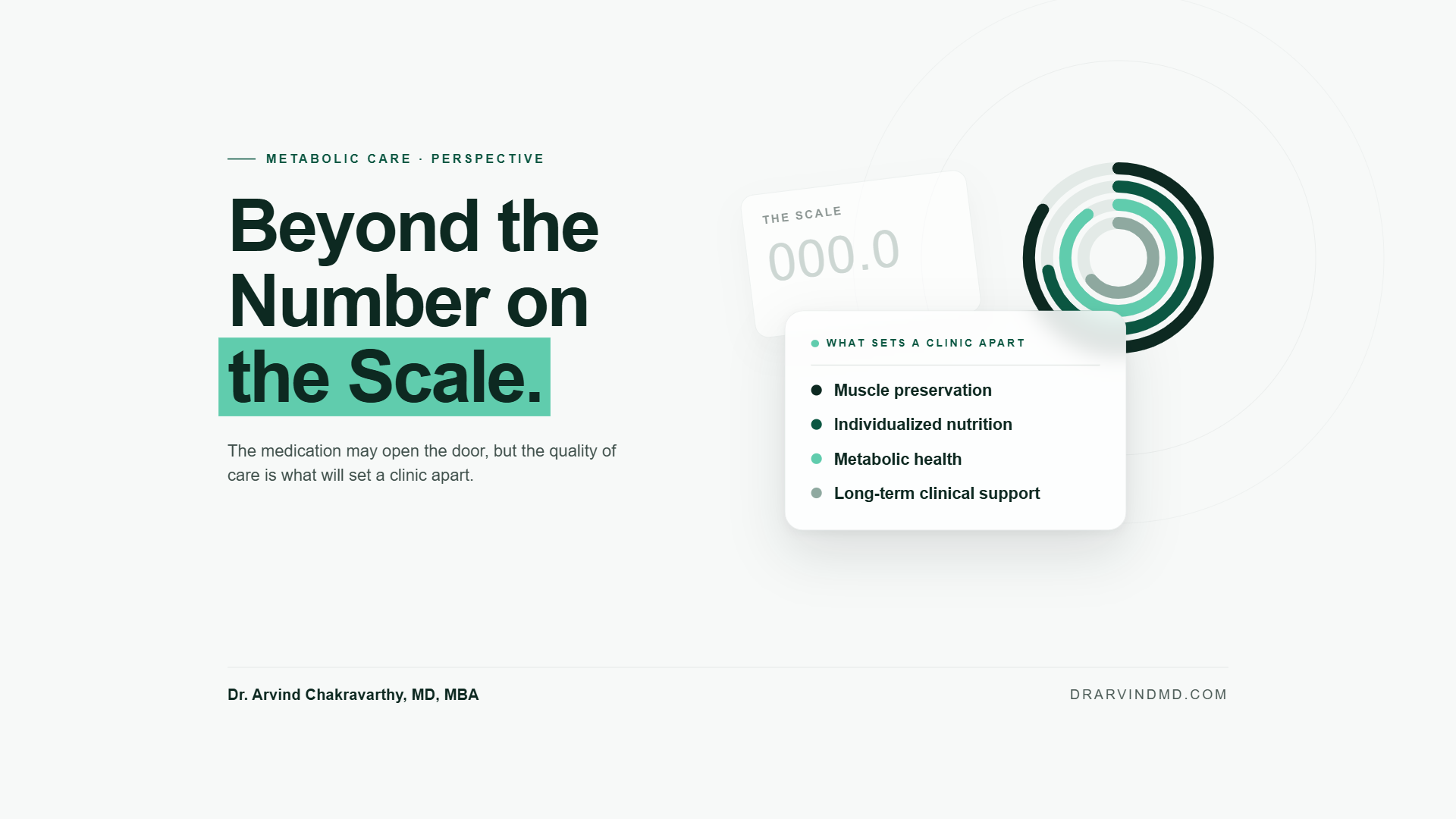
As GLP-based treatments become more accessible, weight loss clinics will need to prove their value beyond prescribing medication. The future of metabolic care belongs to practices that look beyond the number on the scale, prioritizing muscle preservation, individualized nutrition, metabolic health, and long-term clinical support. The medication may open the door, but the quality of care is what will set a clinic apart.
By Dr. Arvind Chakravarthy MD, MBA
By Dr. Arvind Chakravarthy, MD, MBA
If your weight loss clinic’s main value is access to a prescription, I believe your business model is on borrowed time.
As patients gain more ways to obtain GLP-based treatment, clinics will face a question they should already be answering:
What are you providing beyond the medication?
This is my prediction: the clinics most vulnerable to disruption are those charging ongoing premium fees for little more than prescribing and a monthly weigh-in.
The opportunity for comprehensive metabolic care remains substantial. But clinics will have to earn it.
The scale is an incomplete report card
Weight loss can produce meaningful health benefits. We should celebrate those improvements.
We should also ask what the weight loss consists of and how the patient is functioning.
In a STEP 1 body-composition substudy, semaglutide reduced fat mass and visceral fat, alongside a reduction in lean body mass. The proportion of body weight represented by lean mass improved. Lean mass also includes more than skeletal muscle, so those findings should not be reduced to the claim that GLPs simply “destroy muscle.”
The clinical question is more useful: how do we help this individual lose excess fat while supporting strength, nutrition, and physical capacity?
A clinic that celebrates every pound lost without asking those questions is using an incomplete definition of success.
Muscle preservation should be part of the service
My expectation is straightforward.
Patients should receive an individualized nutrition strategy, appropriate protein guidance, resistance-training support, and monitoring that reflects their clinical needs.
They should have someone evaluating medication tolerance, adjusting treatment appropriately, and noticing when reduced appetite is making adequate nutrition difficult.
They should understand their progress beyond the number on the scale: waist measurements, blood pressure, relevant metabolic markers, strength, and daily function.
That is a service worth paying for. A generic handout attached to a recurring charge is harder to defend.
Maintenance deserves its own plan
Clinics also need to stop treating the goal weight as the end of care.
Obesity management may require long-term treatment, and stopping medication can lead to weight regain. Nutrition, physical activity, and ongoing clinical support remain part of treatment rather than an optional upgrade.
Patients deserve a clear discussion about maintenance, affordability, tolerability, and what happens if treatment changes.
Promises that everyone can complete a short course and permanently “reset” their metabolism deserve serious skepticism.
Telehealth will raise the pressure to deliver value
I work with telehealth platforms because well-designed care should reach beyond a small group of people who can afford exclusive memberships.
But scale creates responsibility. A convenient purchase needs to connect to a thoughtful clinical process.
My prediction is that GLPs will make the prescription-centered weight loss clinic increasingly difficult to sustain.
Clinics that build around metabolic health, muscle preservation, coaching, and follow-through will have a much stronger reason to exist.
The medication can open the door. The quality of care determines whether the clinic deserves the patient’s continued business.