Peptides Are Becoming Popular Because Traditional Medicine Leaves People Feeling Unheard
Peptide therapeutics deserve a meaningful place in the future of personalized medicine, but their potential requires more than enthusiasm. Dr. Arvind Chakravarthy explores why peptide medicine is gaining attention, what cellular signaling means for proactive health, and why evidence, clinical judgment, and a personalized strategy must guide its application.
By Dr. Arvind Chakravarthy MD, MBA
By Dr. Arvind Chakravarthy, MD, MBA
The peptide conversation is growing because patients are asking for something healthcare has been slow to deliver: a serious response to feeling less capable than they used to.
They are tired. Their recovery is slower. Their performance is declining. They are doing what they have been told to do, yet something still feels off.
Then they hear: “Your labs are normal. You’re getting older.”
That answer is no longer good enough.
I believe peptide therapeutics deserve a meaningful place in the future of personalized medicine. The biology is compelling, the therapeutic possibilities deserve investigation, and patients are right to ask what else may be possible.
We should take cellular signaling seriously
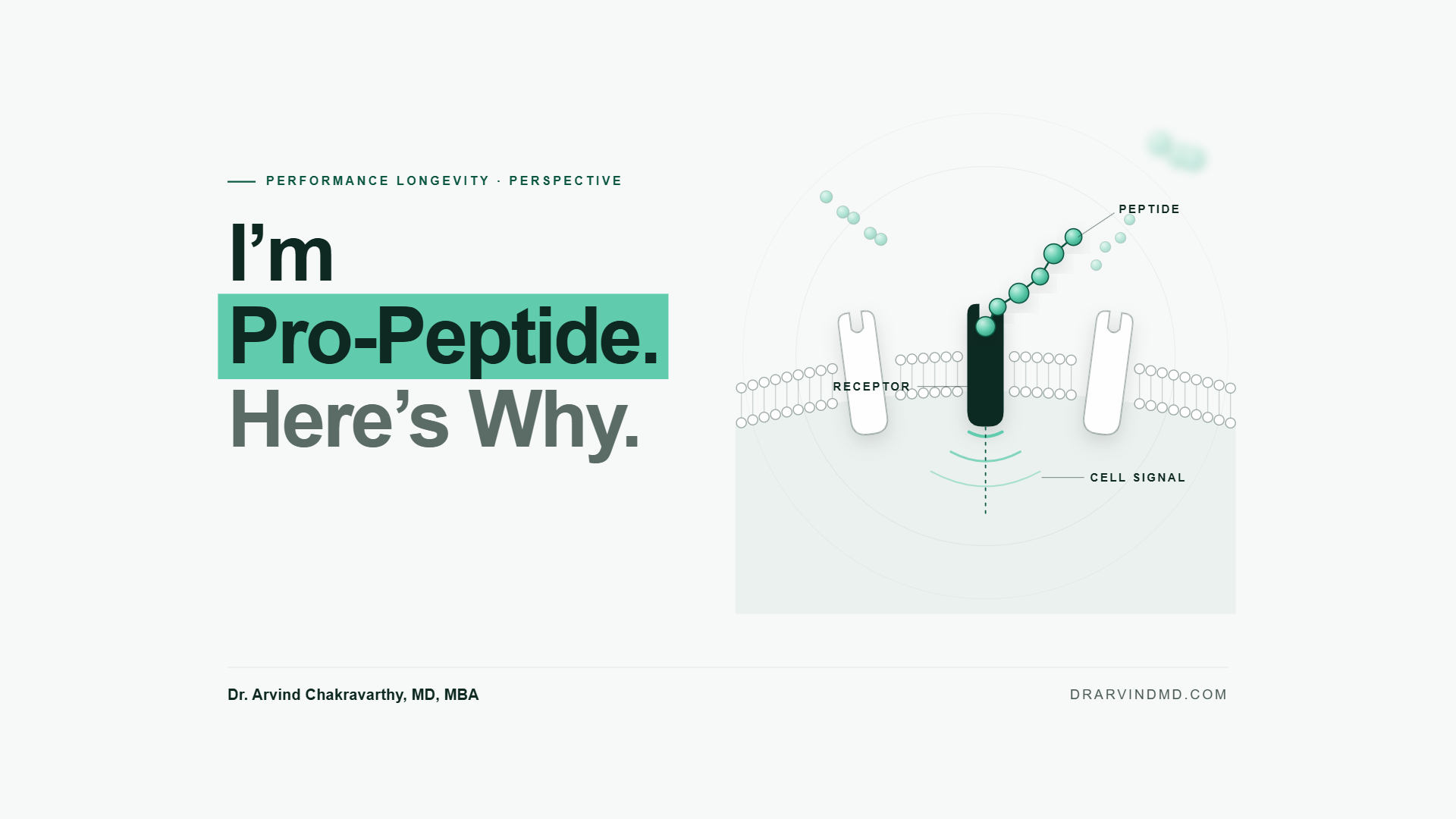
Peptides are short chains of amino acids, and many act as biological messengers. They participate in processes involving metabolism, appetite, hormonal signaling, and tissue function.
That makes them an important area of medicine to understand—not a trend to dismiss because the conversation has become popular online.
GLP-based therapies have already demonstrated how powerful a peptide-based approach can be in metabolic care. Their success does not establish the effectiveness of every other peptide, but it should challenge the reflex to treat the entire category as fringe.
Each molecule deserves to be evaluated on its own biology, human evidence, and clinical application.
That is how a field advances.
Patients want more than reassurance
Traditional medicine does extraordinary work treating acute illness and established disease. My emergency medicine background gave me deep respect for that.
But patients also want help maintaining strength, recovering from activity, managing metabolic health, and preserving their ability to perform.
Those are legitimate goals.
A person should not have to wait for a significant decline before their concerns receive sustained attention. And curiosity about emerging therapeutics should lead to a thoughtful medical conversation.
In my view, some of the enthusiasm for peptides reflects patients finally finding a language for what they have been asking: can we work with my biology earlier and more precisely?
I am pro-peptide—and pro-purpose
My interest in peptides comes from their potential to influence specific biological pathways. That potential becomes clinically useful when we connect the right intervention to a clear patient need.
What are we trying to improve? Why does this particular molecule make sense? What evidence supports that use? How will we assess the response?
These questions strengthen peptide medicine. They help move it beyond a shopping list of popular compounds.
An emerging peptide may have promising biology while still having limited human evidence. We should communicate that clearly and keep building the evidence. Enthusiasm and scientific discipline can exist in the same room.
The physicians helping develop this field should be among its most thoughtful advocates.
A peptide belongs inside a strategy
This is where my Cell Signalomics™ philosophy comes in: understanding the patient, considering the relevant signaling pathways, defining a personalized strategy, and reassessing over time.
Sleep, nutrition, strength training, metabolic health, and hormonal evaluation provide essential context. Peptide therapeutics, when clinically appropriate, can become part of that broader plan.
The goal is to give each intervention a job—and determine whether it is doing that job.
Telehealth can help bring this approach to a broader population through physician evaluation, education, and meaningful follow-up. Patients should have access to expertise as well as treatment.
Medicine needs the confidence to explore
I am optimistic about the future of peptides. I want better research, stronger clinical frameworks, and more physicians willing to engage with the science.
Dismissing the field will not make patient demand disappear. It will leave more of the conversation to people selling certainty without accountability.
Patients are asking for more proactive, personalized care. Peptide medicine has an opportunity to help answer that demand.
We should be working to realize that potential.